
Your Minecraft host since 2012












Your Minecraft host since 2012
Find your server's panel, your backups and your invoices.
No account yet? Create an account
No bank card required: you only pay when you order a server.
Already have an account? Log in
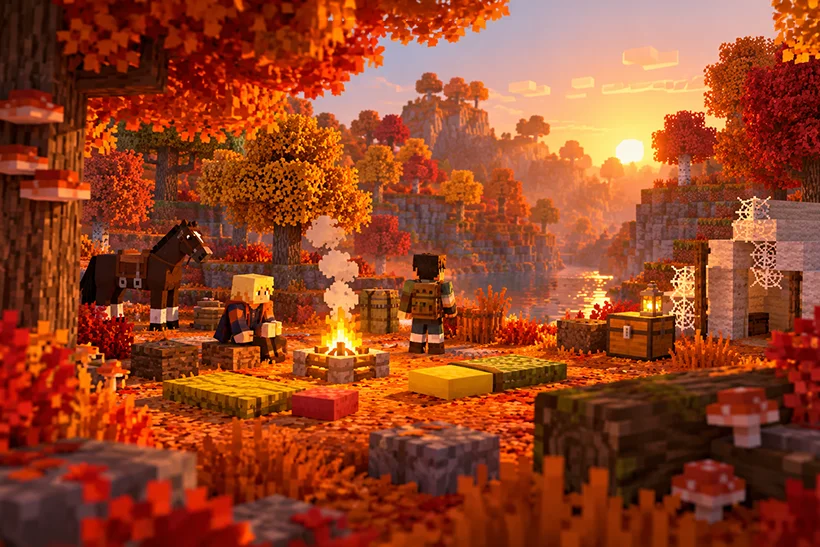
Minecraft Java Edition 26.3 releases the Wilderness Bound update. It adds a dappled forest biome, poplars, abandoned camps, new building blocks and several changes that affect servers, datapacks and resource packs.
For a community server, check three points before going to production: the whitelist becomes active by default in server.properties, the datapack version changes to 121.0, and the resource pack version changes to 97.1.
Make a full backup of the world before opening an existing map in 26.3. The file
level.datnow gets aversion_historyhistory, and old exploration maps are converted when loading.
server.properties and check the line white-list=true.The property white-list is now true by default. A newly created server therefore refuses unauthorized players until you set up your whitelist. On a server already online, check this behavior before announcing the update to your community.
The new biome Dappled Forest, translated here as dappled forest, appears near cold biomes. It generates standing poplars, fallen poplars, shelf mushrooms and red shrubs. Passive and neutral animals use their cold variants there when they exist: sheep, chickens, cows, pigs, rabbits and foxes.
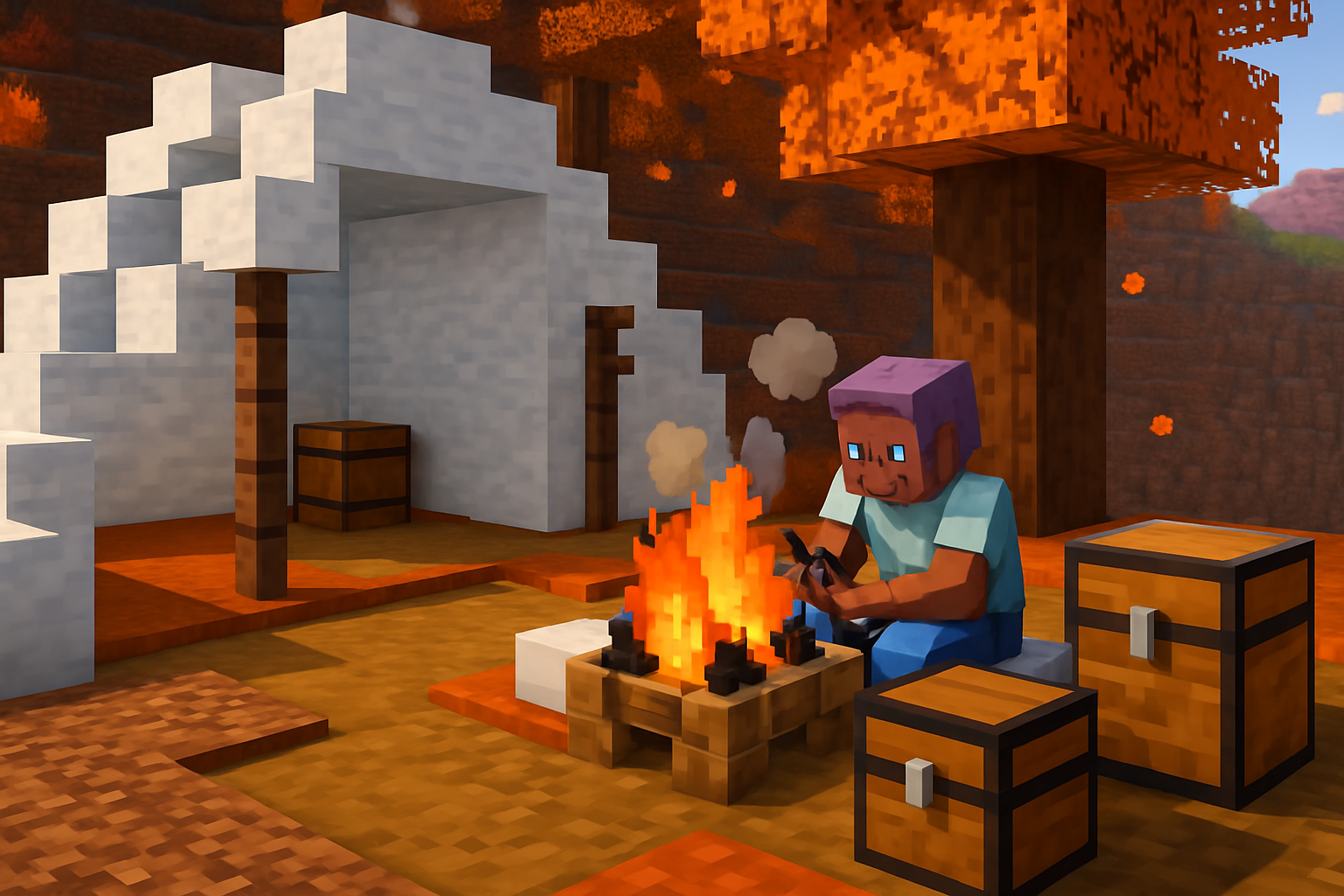
Abandoned camps are added in many biomes: meadow, cherry grove, forest, birch forest, old growth birch forest, flower forest, windswept forest, dappled forest, taiga, snowy taiga, old growth spruce taiga, old growth pine taiga, sparse jungle, bamboo jungle, swamp, savanna, wooded badlands and pale garden. Each biome has its own visual variant. You can find chests and barrels there with loot.
| Added | Use |
|---|---|
| Poplar | New wood, red, orange or yellow leaves, saplings tradeable with the wandering trader. |
| Shelf mushroom | Grows on poplars, exists in small and large sizes, bounces slightly under entities. |
| Red shrub | Decorative compostable plant, spreads with bone meal if a neighboring block is suitable. |
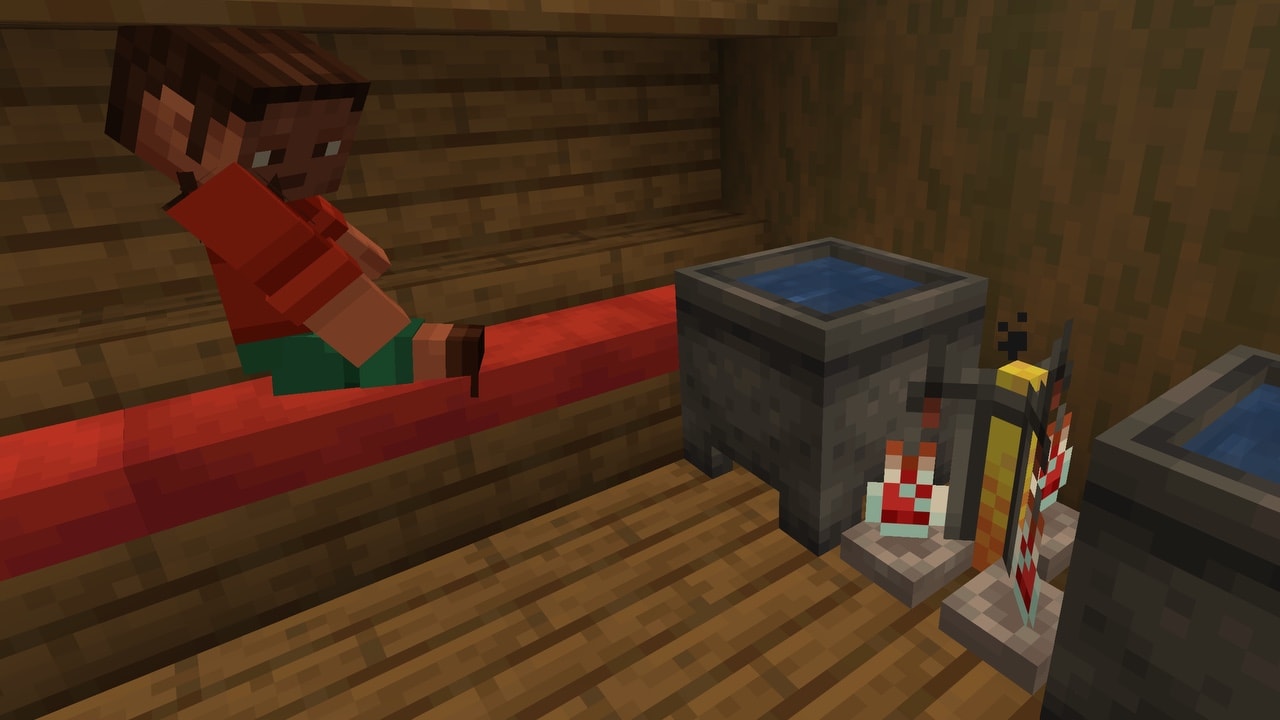
| Straw Bed | Allows sleeping once without setting the spawn point. |
| Cushion | Placed on the ground and used as seating, with 16 colors. |
Poplars give poplar logs, then a full family of wood blocks. The leaves come in three colors. Poplar saplings can randomly produce one of the three variants once mature.
Cushions are crafted with 3 wool slabs of the same color. They are placed on a flat surface, stay aligned to the horizontal grid, have no collision and are not pushed by pistons. They break if the block supporting them disappears.
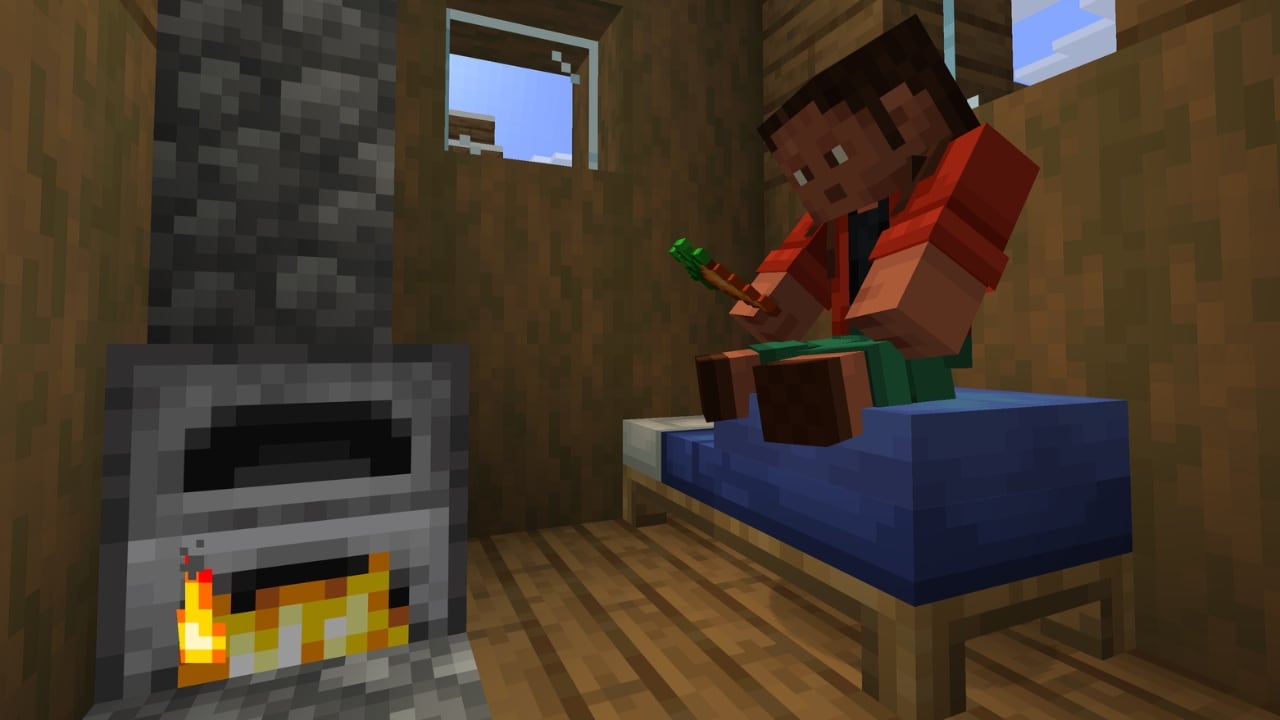
The straw bed is crafted with 3 hay bales and gives 4 straw beds. It is used only once. After the night, it is destroyed. In the Nether or the End, it does not allow sleeping and disappears if you try to use it. A dedicated statistic counts the nights spent in this type of bed.
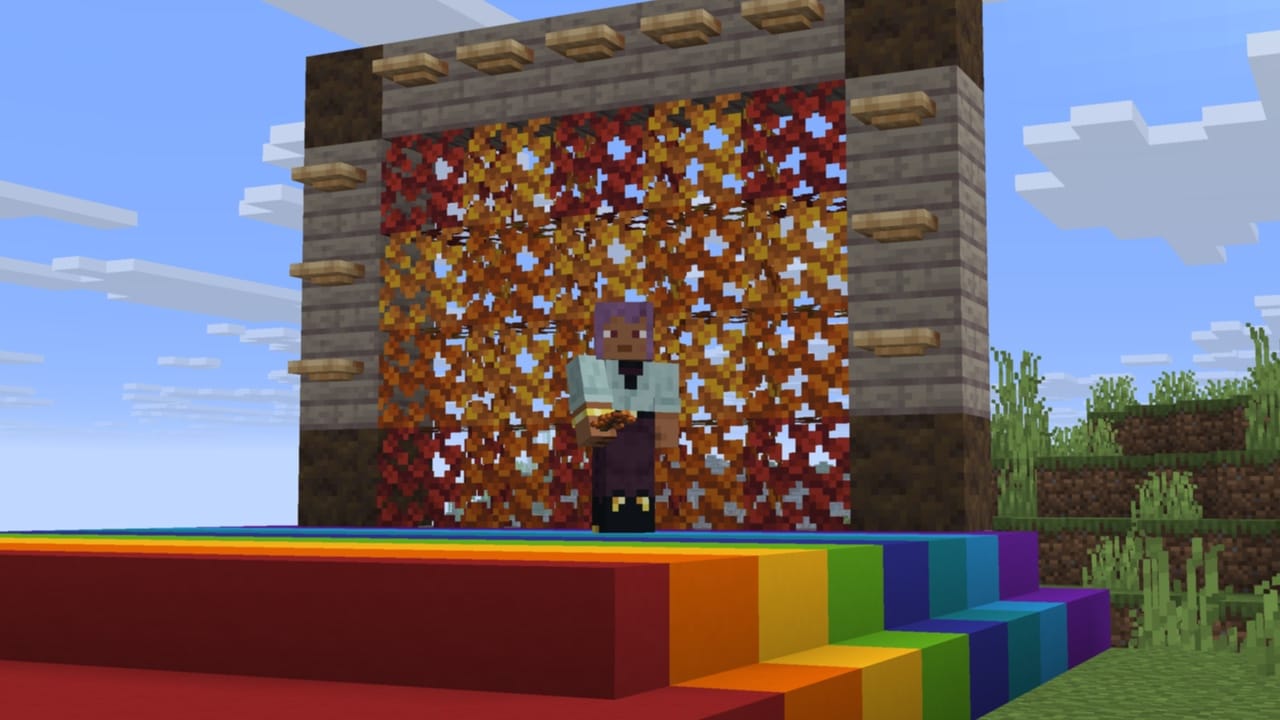
Each wool color gets stairs and slabs. These variants dampen vibrations like standard wool blocks. Concrete also gets stairs and slabs for all colors. Concrete slabs and stairs also go through the stonecutter.
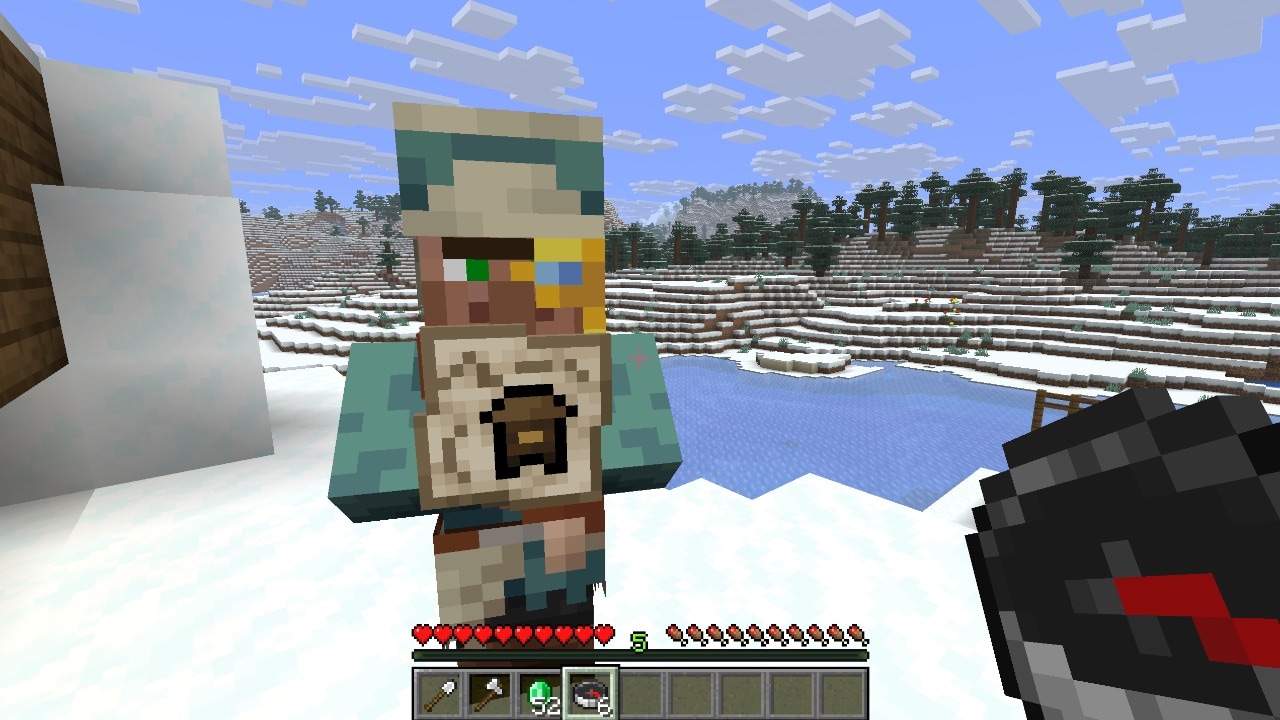
Exploration maps become separate items instead of simple renamed filled maps. Each one has its own icon, ocean monument, mansion, buried trial chambers, jungle pyramid, swamp hut, villages, buried treasure, buried ancient city, mineshaft, desert pyramid, abandoned camp and warm ocean ruins.
The old maps from existing worlds are converted to the new corresponding item when loaded. They can still be cloned in a crafting table. However, exploration maps and treasure maps can no longer be zoomed out, either in a crafting table or in the cartography table. Only maps with the tag #minecraft:extendable_maps keep this ability.
Realm owners now have invitation codes. A Realm can have up to five codes. Each code can be enabled, disabled, deleted and given an expiration date. Players join a Realm through a new screen Join Realm, accessible from the Realms main menu.
Realm settings also gain view distance and simulation distance sliders. A new presentation screen appears through the add Realm button, or automatically if a trial is available.
The main menu shows an updated panorama with the speckled forest and an abandoned camp. Falling leaf particles are removed from spruces. Mushroom stews and suspicious stews now accept 2 mushrooms of any type.
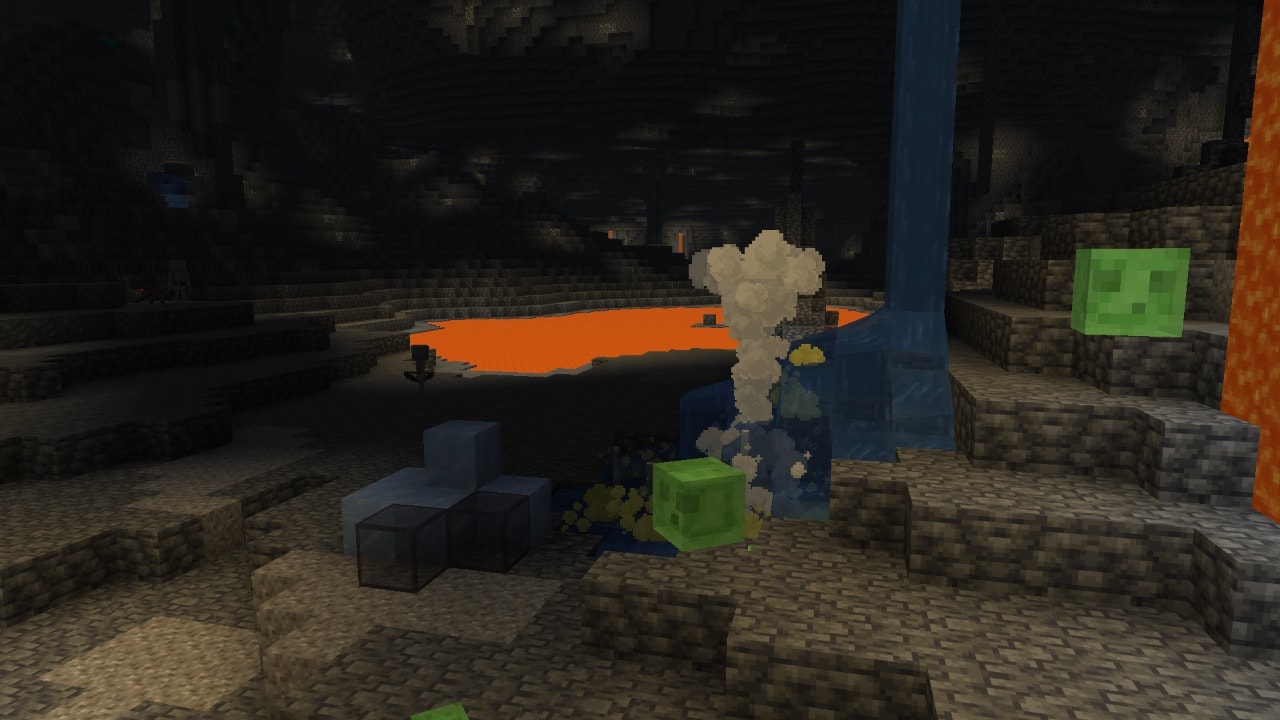
Transparency rendering changes. The old setting Improved Transparency used several separate textures to limit certain issues. In 26.3, this setting enables an order independent transparency algorithm, called OIT. It fixes the main issues with translucent objects disappearing behind other translucent surfaces, at the cost of higher expected performance impact and a few possible minor artifacts. The shortcut F3 + X lets you toggle this setting.
The interface also gets several tweaks, removal of the Raw Input setting, shortcuts based on physical keys, borderless fullscreen by default, switching between exclusive fullscreen and borderless without restarting, minimum window size of 320 by 240 pixels, native Wayland support on Linux when available.
The datapack version becomes 121.0. Several commands report errors better, including /give, /unpublish and /tick. Signs no longer automatically run click events in custom text, except for legacy data or an explicit field.
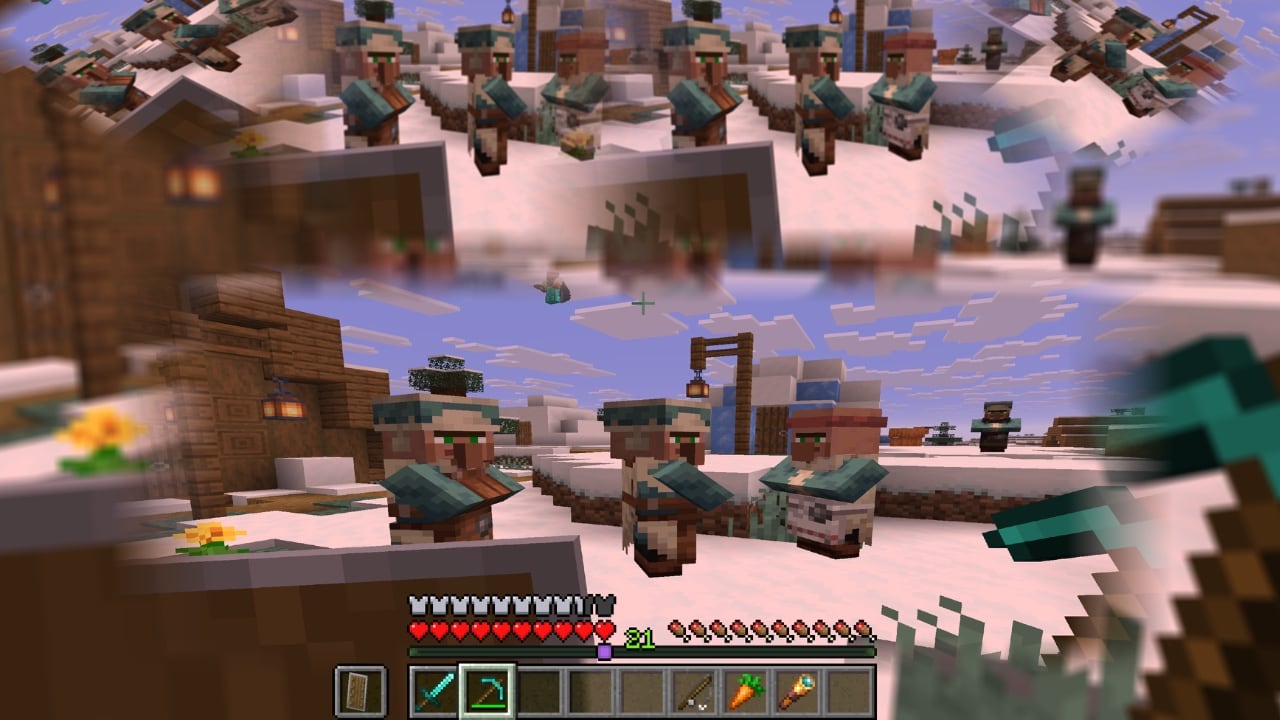
The command /posteffect applies or removes post-processing effects on the client side. These effects come from resource packs. The server requests the application, but it cannot verify that the client actually has the effect.
/posteffect add <player> <posteffect>
/posteffect clear <player>
/posteffect list <target>
/posteffect remove <player> <posteffect>The new command \/compute evaluates values minecraft:context_int_provider and minecraft:context_float_provider in different contexts. It fails if evaluation fails, for example when dividing by zero.
\/compute <target> integer <int_provider>
\/compute <target> float <float_provider> [<scale>]
The command \/data modify also gets a source compute to write the result into NBT storage, as an integer or a float.
\/item now uses slot sources instead of standalone slots. The subcommands fill and override arrive. \/execute gets a slotscondition, and its items condition also accepts a slot source. \/swing no longer resets a player's attack strength and accepts the animations none, whack and stab, with an optional duration.
The resource pack version moves to 97.1. The game uses SDL3 for the window, inputs and platform integration, instead of GLFW. Keyboard inputs use SDL scancodes for physical positions and SDL keycodes for text entry shortcuts.
Many data components arrive or change: minecraft:cooking_fuel, minecraft:brewing_fuel, minecraft:block_transformer, minecraft:sign_text_front, minecraft:sign_text_back, minecraft:waxed, minecraft:cushion\/color, minecraft:compostable, minecraft:villager_food, minecraft:mob_visibility, minecraft:attack_animation and minecraft:interact_animation. The old minecraft:swing_animation disappears. minecraft:map_color is removed, because maps are no longer drawn as a tinted layer.
Pottery sherds become data-driven. The component minecraft:pot_decorations and the block entity minecraft:decorated_pot no longer use a list of 4 item IDs. They now use optional fields back, left, right and front, as item stacks.
Furnaces, smokers and blast furnaces store several times as integers instead of shorts. Brewing stands do the same for BrewTime and Fuel, and add total_brew_time, total_fuel and speed_multiplier. Entities also gain the tag invulnerable_time, which makes an entity temporarily invulnerable for a given number of ticks.
Some log lines used by server management tools are removed. Use the Minecraft Server Management Protocol instead when your software supports it. Version 3.1.0 adds notifications for complete world upgrades at startup: minecraft:notification\/world\/upgrade_started, minecraft:notification/world/upgrade_progress, minecraft:notification/world/upgrade_finished and minecraft:notification/world/upgrade_failed.
Structure search and chunk generation performance are improving. Terrain blocks use MultiDrawIndirect on compatible devices. Persistent mobs now stop their random walking or swimming behaviors when no player is nearby, like non-persistent mobs.
 Continue with Google
 Continue with Discord